

Joseph Kapelyan
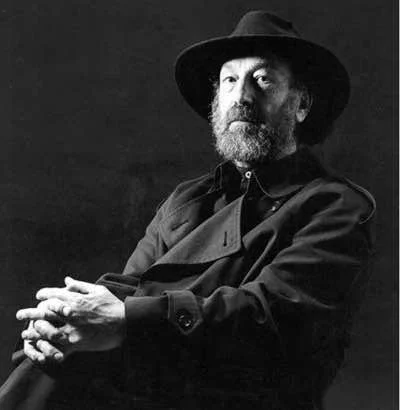
About Joseph Kapelyan
Joseph Kapelyan is an acclaimed Belarusian-Israeli painter and graphic artist whose distinguished career spans over six decades. His work covers a wide variety of techniques, including painting (oil, watercolor, gouache, and pastel) as well as graphic arts and printmaking (linocut, etching, lithography, silkscreen, and woodcut). Today, his masterpieces reside in esteemed permanent museum collections globally, including The State Hermitage Museum, the National Art Museum of Belarus, and the Marc Chagall Museum.
Chronology & Personal Journey
Early Roots & Education: Born in 1936 in Bobruisk, Belarus, he began his journey at age eight in the local art studio of the Bobruisk House of Pioneers—an early experience that shaped his lifelong passion. He later built his academic foundation in Leningrad, graduating from the Art-Graphic Pedagogical College in 1956. He then studied at the graphic arts department of the Vitebsk Pedagogical Institute from 1959 to 1960, before completing his advanced education in 1966 at the graphics department of the Belarusian State Theatre and Art Institute in Minsk (now the Belarusian State Academy of Arts).
The Soviet Career: In 1962, he was admitted to the Union of Artists of the USSR, regularly participating in all-Union and republican art exhibitions. During this period, he earned professional awards for designing and illustrating over 130 books, showcasing his wide creative range in both easel and book graphics using master-level linocut, etching, and lithography.
The Israeli Period: In 1980, Kapelyan immigrated to Israel, where he lives today. Starting in 1981, he worked for 25 years as a graphic artist at Tel Aviv University's Institute of Archaeology. In 1987, he became one of the founders of the Sa-Nur artists' village in Samaria and was a regular participant in its annual exhibitions. In April 2003, he acted as the main initiator behind the creation of the Association of Professional Artists of Israel and was elected its first chairman, leading the organization for its first five years.
Global Recognition: Over his long career, he has held more than 59 solo exhibitions and participated in more than 302 group exhibitions worldwide. A major milestone was his 2016 exhibition at the Saint Petersburg State Roerich Family Museum-Institute, following which he was awarded the prestigious International Nicholas Roerich Award in the "Artistic Creation" category.
Selected Painting & Graphic Cycles
During his career, his work has evolved through several distinct, notable thematic cycles:
Family Album (or Large Family): A deeply nostalgic, signature graphic and painting cycle, executed in his signature 'Daguerreo-Romanticism' style
The Drypoint Series: Highly precise, delicate etchings including Ancient Jerusalem.
Wings of Light Illustrations: A specialized series of geometric, Suprematist-style illustrations created for Aaron Kotlyar's esoteric poetry collection.
Published Books & Monographs
Joseph Kapelyan: Art, Reality and Mysticism (1999) — A landmark 380-page monograph written by art critic Miriam Or and published by Master Garden, archiving his life's work with 1,469 black-and-white and 115 color reproductions of his art.
The Book of Psalms (2011) — Served as the chief design and graphics editor for this major Jerusalem publication, featuring illustrations from 150 different Israeli artists.
Joseph Kapelyan: Painting and Graphic Art (Multi-Volume Series) — A comprehensive set of art volumes documenting his lifelong portfolio, including the 1999–2009 edition and the 2009–2016 edition published by Master Garden.
Selected Outstanding Jewish Painters (2004) — A prominent art historical book published in Poland, selecting Kapelyan as one of only three living Israeli artists to be included.
Critical Acclaim
"A vast world that absorbs prosaic everyday life and aspiration to astral heights, the objective materiality of the physical environment and the magic of cosmogonic abstraction, the universality of spiritual values and the polychromy of living Nature. The artist combines the possible with the impossible, the manifest with the hidden, and unites everything by the power of a bright and original talent, bound by a high culture of color and drawing."
— Dr. Grigory Ostrovsky, Professor of Art History
"Kapelyan's paintings are poetic, like songs; lines and colors are used in them like rhymes and stanzas..."
— Dr. Miriam Or, Art Critic